
Ceremonial vs Culinary Matcha: What’s the Difference?
Ceremonial matcha is made from the youngest, most carefully shaded leaves of the tea plant stone-ground slowly into a silky powder meant to be drunk plain, with nothing added. Culinary matcha is made from older leaves harvested later in the season, ground faster, and built to hold its own flavor when mixed with milk, sugar, butter, or heat. Same plant. Completely different product.
The words "ceremonial grade" on a tin mean nothing on their own. There is no government in the world that defines what ceremonial grade matcha has to be. No certification to pass. No inspector who checks. Any company can print those two words on any green powder and nobody can stop them.
So why does grade matter at all, if the label isn't regulated?
Because the actual difference between the two grades, the real one, the one you can taste and measure is enormous. It starts in a field in Japan, four weeks before a single leaf is picked. It is written in the chemistry of the plant, in the color of the powder, in the way the flavor sits on your tongue. The label does not create the difference. The farming does. The production does. The leaf itself does.
This guide will explain all of it clearly what separates these two grades, why it matters, and exactly which one you should be buying for whatever you are making. No confusion. No vague answers.
What Is Matcha and Why Does Grade Matter So Much?
To understand why the two grades are so different, you first need to understand what makes matcha unlike every other tea.
Matcha comes from the same plant as regular green tea Camellia sinensis. But when you make regular green tea, you put leaves in hot water, let them steep, then throw the leaves away. The water pulls out maybe 20 to 30 percent of what is inside the leaf. The rest goes in the bin.
Matcha works completely differently. The tea leaves are dried and ground into an ultra-fine powder. You add that powder directly to water and drink all of it powder and water together. You are consuming the entire leaf in every single sip.
That means every nutrient, every antioxidant, every amino acid 100 percent of what is in the leaf ends up in your cup. A 2021 scientific review in the journal Molecules confirmed that this whole-leaf consumption is exactly why matcha delivers dramatically more antioxidants per serving than any steeped green tea.
This is also why grades matter so much with matcha. When you drink the whole leaf, the quality of that leaf is completely reflected in your cup. There is nowhere for poor quality to hide.
Source: Kochman J., Jakubczyk K., Antoniewicz J., Mruk H., Janda K. (2021). Health Benefits and Chemical Composition of Matcha Green Tea: A Review. Molecules, 26(1), 85. Available at: https://www.ncbi.nlm.nih.gov/pmc/articles/PMC7796401/
Exceptionally high quality matcha from Shizuoka stone ground for raw taste and color.
Beverage grade matcha from Kagoshima, Japan with smooth flavor, perfect for lattes.
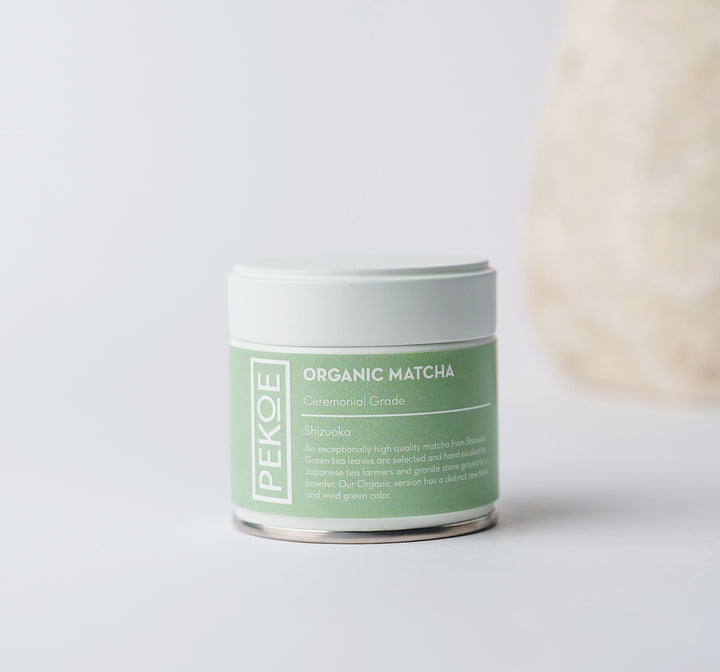
Organic Matcha
Sale price
AED 175.00
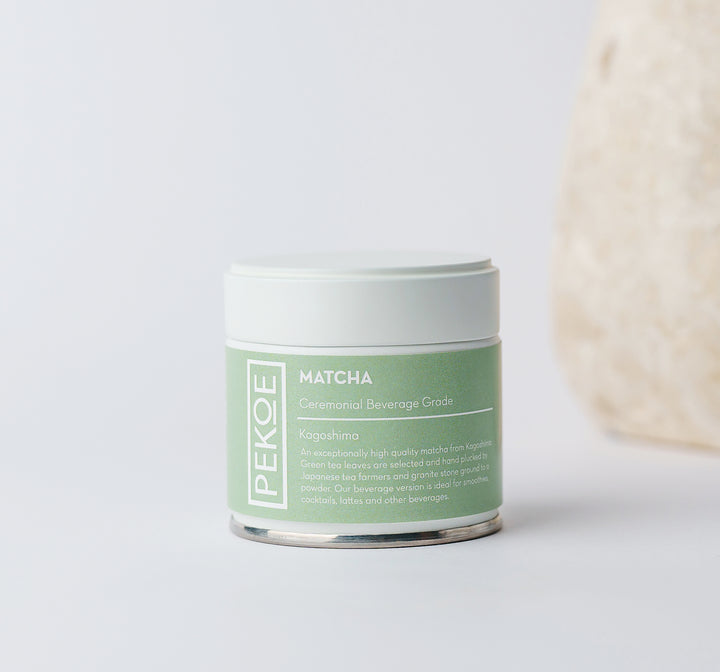
Matcha Beverage Grade
Sale price
AED 95.00
The 9 Clear Differences Between Ceremonial and Culinary Matcha
Let's get straight to it. Here are every meaningful difference between the two grades, explained simply and clearly.
Difference 1: Which Leaves Are Used
This is the most fundamental difference of all and everything else flows from it.
Ceremonial grade is made from the youngest, most tender leaves at the very tip of the tea plant. These are picked during the first harvest of the year called Ichibancha or "first flush" which happens in late April to early May. Think of it like picking only the baby leaves at the top of the plant, the ones that have never seen much sun and are packed with nutrients.
Culinary grade is made from older, larger leaves picked in the second, third, or later harvests running from late spring into summer. These leaves have been sitting on the plant longer, exposed to more sun, and have tougher cell walls. They have done more "work" for the plant and it shows in the flavor.

Why it matters: The youngest leaves have the highest concentration of the good stuff L-theanine (the calm-focus compound) and chlorophyll (the vivid green color). Older leaves have converted more of that L-theanine into bitter compounds. This one difference in leaf age explains most of the taste difference between the two grades.
Difference 2: How Long the Plants Are Kept in the Shade
Before harvest, matcha farmers cover their tea fields with bamboo mats or black mesh nets that block 70 to 90 percent of sunlight. This shading process is what separates matcha from every other green tea and the length of shading is what separates ceremonial from culinary.
Ceremonial grade: plants are shaded for 20 to 30 days, sometimes longer.
Culinary grade: plants are shaded for 7 to 14 days, sometimes barely at all in cheaper production.
Why it matters: When a tea plant is cut off from sunlight, two remarkable things happen inside the leaf. First, it produces dramatically more chlorophyll, the compound that gives premium matcha its vivid, almost electric emerald green color. Second, it accumulates far more L-theanine, the amino acid responsible for matcha's smooth umami flavor and calm focused energy. More shade days means more of both. Less shade means less of both and more bitterness instead.
A 2014 meta-analysis published in Nutrition Reviews reviewed 11 clinical trials and confirmed that L-theanine combined with caffeine significantly improves attention, accuracy, and reaction time compared to caffeine alone. This is the science behind why matcha feels different from coffee.
Source: Haskell C.F., Kennedy D.O., Milne A.L., Wesnes K.A., Scholey A.B. (2014). Nutrition Reviews. PubMed PMID: 24946991. Available at: https://pubmed.ncbi.nlm.nih.gov/24946991/
Difference 3: Color — What You See Before You Even Taste It
Open a tin of each grade side by side and the difference is immediately visible before you taste a single drop.
Ceremonial grade is a vivid, bright emerald green almost luminous, almost too green to look real. This intense color comes directly from the high chlorophyll content built up during the long shading period.
Culinary grade is a duller, more muted olive or yellowish green. Less shading, later harvest, lower chlorophyll the color reflects all of that honestly.
A warning about any grade: if your matcha looks yellowish, brownish, or grey-green, that means oxidation damage the matcha is old, poorly stored, or very low quality. Avoid it regardless of what the label says. Chlorophyll breaks down when exposed to air, heat, and light, and you cannot reverse that process.
Why it matters: Color is your fastest quality check before buying anything. Vivid green means high chlorophyll, properly shaded, properly stored. Dull green means less shading or later harvest normal for culinary but a red flag if a product is charging you ceremonial prices.
Difference 4: Flavor — What It Actually Tastes Like
This is where most people feel the difference most clearly.
Ceremonial grade tastes smooth, naturally sweet, and deeply savory what tea experts call umami. Think of the rich, full-bodied depth you get from a good broth or aged parmesan. Almost no bitterness at all, even without adding sugar or milk. You could sip a whole bowl slowly and enjoy every drop.
Culinary grade tastes bold, strong, and noticeably bitter. Not in an unpleasant way more like strong dark chocolate or black coffee without milk. Sharp. Powerful. Unmistakably matcha. But not something you would want to sip slowly from a plain bowl of hot water.
Why the flavor is so different: Ceremonial grade is high in L-theanine, which creates umami and suppresses bitterness on your tongue. Culinary grade is high in catechins specifically EGCG which are bitter compounds. Same plant, completely different ratio of flavor compounds, completely different taste experience.
Difference 5: Texture — How It Feels in Your Mouth
Run your fingers through ceremonial matcha and then culinary matcha. You will feel the difference immediately.
Ceremonial grade feels silky, almost impossibly fine like touching face powder or the finest flour you have ever felt. The particle size is under 20 microns, which is finer than talcum powder. When you whisk it into water, it dissolves completely. Nothing settles at the bottom. The suspension stays smooth and feels silky in your mouth.
Culinary grade is noticeably coarser. It can feel slightly gritty between your fingers and may not dissolve as fully when whisked. This is why culinary matcha can feel less pleasant when consumed straight the coarser particles are more noticeable on your palate.
Why it matters: The ultra-fine texture of ceremonial matcha is not just about feel; it affects flavor delivery too. Smaller particles have more surface area, which means more of the flavor compounds are in contact with your taste receptors at once.

Difference 6: How the Powder Is Ground
This is one of the most overlooked differences and one of the most important for understanding why prices differ so much.
Ceremonial grade is ground using traditional granite stone mills called hikiusu. These mills turn very slowly, producing only 30 to 40 grams of powder per hour. That means one standard 30g tin of ceremonial matcha takes roughly one full hour of grinding at a single stone mill before accounting for all the harvesting, shading, steaming, and aging that came before it.
The slow speed is intentional and essential. Grinding creates friction. Friction creates heat. Heat destroys chlorophyll, degrades L-theanine, and burns off the aromatic compounds that give good matcha its complex flavor. Stone grinding keeps temperatures low enough that everything valuable in the leaf survives the process intact.
Culinary grade is processed using industrial ball mills or mechanical grinding equipment. Fast, high-volume, far cheaper to operate. But the heat generated visibly affects the final product duller color, coarser texture, simpler flavor profile.
Why it matters: The grinding method is why "stone-ground" on the label matters and why you should ask about it. It is also why genuine ceremonial matcha costs what it does, the time and equipment required make it impossible to produce cheaply.
Difference 7: L-Theanine Content — The Calm Focus Compound
Ceremonial grade is significantly higher in L-theanine because of the extended shading period and first-flush harvest timing, both of which maximize L-theanine accumulation in the leaf.
Culinary grade is lower in L-theanine because less shading means more of it converts into catechins before harvest.
Why it matters: L-theanine is the compound behind matcha's signature effect, the calm, focused, sustained energy that coffee cannot replicate. A 2017 study published in Current Pharmaceutical Design confirmed that L-theanine promotes relaxation without drowsiness and enhances the cognitive benefits of caffeine without amplifying its negative effects like anxiety or jitters.
If you are drinking matcha specifically for the calm-focus effect, ceremonial grade gives you significantly more of what drives that outcome.
Source: Dietz C., Dekker M. (2017). Effect of Green Tea Phytochemicals on Mood and Cognition. Current Pharmaceutical Design. PMID: 28056735. Available at: https://pubmed.ncbi.nlm.nih.gov/28056735/
Difference 8: EGCG Antioxidant Content
Here is a surprising one that flips the expected logic:
Culinary grade is actually higher in EGCG, the primary antioxidant compound in green tea than ceremonial grade.
This is because later-harvest, more sun-exposed leaves convert more L-theanine into catechins including EGCG. More sun, more catechins, more EGCG.
Ceremonial grade has moderate EGCG levels, still excellent compared to most other foods, but lower per gram than culinary.
Why it matters: The 2021 review in Molecules confirmed that matcha's antioxidant score is approximately 1,573 ORAC units per gram around 17 times higher than blueberries. This applies to both grades. But if your primary goal is maximizing antioxidant intake, culinary grade in a daily smoothie or latte is an excellent and cost-efficient approach. You do not need to spend ceremonial prices to get powerful antioxidant benefits from matcha.
Source: Kochman J. et al. (2021). Molecules, 26(1), 85. PMC7796401. Available at: https://www.ncbi.nlm.nih.gov/pmc/articles/PMC7796401/
Difference 9: Price — And Whether It Is Justified
Ceremonial grade typically costs $25 to $60 or more for a 30g tin.
Culinary grade typically costs $8 to $25 for a 30g tin.
Why the price difference is real, not just marketing: Genuine ceremonial matcha requires 20 to 30 days of shading, first-flush hand-picking in a short spring window, careful steaming, cold storage aging for weeks or months, and then stone grinding at 30 to 40 grams per hour. One 30g tin is literally one hour of grinding alone. The labor, the time, the careful production it all has a real cost.
When the price is NOT justified: If a tin says "ceremonial grade" but costs under $15, does not name a specific Japanese region, does not mention first flush or harvest timing, and does not say stone-ground you are paying for a label, not for quality. That price point is mathematically incompatible with genuine ceremonial production.
The Full Comparison at a Glance

Does Ceremonial Matcha Actually Taste Better in a Latte?
This is the question most guides get wrong. Here is the direct answer:
Using premium ceremonial matcha in a milk-based latte is, in most cases, a waste of money.
Milk contains proteins called casein that physically bind to the delicate aromatic and flavor compounds in matcha and neutralize them. The subtle sweetness, the layered umami, the smooth complexity you paid a premium for milk removes it on a molecular level. A premium ceremonial matcha in oat milk tastes, in a blind test, almost identical to a well-sourced culinary tin prepared the same way.
What a good matcha latte needs is flavor bold enough to cut through milk and color vivid enough to look right. A high-quality culinary or entry-level ceremonial delivers both at far less cost per serving.

Use ceremonial for drinking plain. That is when every quality difference described in this article is fully present and fully tasted. Use culinary for everything else.
Which Grade Should You Actually Buy?

How to Store Matcha So It Stays Fresh?
Ceremonial matcha is far more delicate to store than culinary and needs proper care.
Always keep it airtight and opaque. Clear glass jars offer zero light protection. Once the tin is open, air contact starts the oxidation clock immediately.
Refrigerate it especially in hot climates. In Dubai and the UAE, room temperature storage is genuinely damaging to open matcha. Keep the tin in the fridge. When you take it out, keep the lid sealed until it reaches room temperature before opening a cold tin in warm humid air causing condensation that introduces moisture into the powder.
Buy ceremonial in small tins 20 to 40g and use within 4 to 6 weeks of opening. Culinary grade is much more forgiving and can be bought in larger amounts without the same risk.
Frequently Asked Questions About Ceremonial Matcha vs Culinary Matcha
Why does my matcha taste bitter even though it is ceremonial?
Can I bake with ceremonial grade matcha?
Is culinary matcha unhealthy?
Does grade change the caffeine level?
What is the best grade if I only want to buy one for everything?
How do I spot a fake ceremonial matcha?
Is matcha from outside Japan worth buying?
The Bottom Line
The differences between ceremonial and culinary matcha are real, measurable, and significant, in the leaves, the shading, the harvest timing, the grinding method, the flavor chemistry, the color, and the price. You now know all nine of them clearly.
The grade label is just a starting point. What matters is origin, harvest timing, and how it was ground. Those three things tell you more about any matcha than the word "ceremonial" ever will.
Drinking it plain? Ceremonial. First flush, stone-ground, named Japanese origin. Worth every extra dollar when you can taste everything it offers. Mixing it in? Culinary. Bold enough to cut through milk and recipes, priced correctly for daily use.
At Pekoe, we source directly from Shizuoka farms, stone-ground to traditional standards, with full origin and harvest information on every product.
References
1. Kochman J., Jakubczyk K., Antoniewicz J., Mruk H., Janda K. (2021). Health Benefits and Chemical Composition of Matcha Green Tea: A Review. Molecules, 26(1), 85. Full study: https://www.ncbi.nlm.nih.gov/pmc/articles/PMC7796401/
2. Haskell C.F., Kennedy D.O., Milne A.L., Wesnes K.A., Scholey A.B. (2014). The effects of L-theanine, caffeine and their combination on cognition and mood. Nutrition Reviews. PubMed. Full study: https://pubmed.ncbi.nlm.nih.gov/24946991/
3. Dietz C., Dekker M. (2017). Effect of Green Tea Phytochemicals on Mood and Cognition. Current Pharmaceutical Design, 23(19). Full study: https://pubmed.ncbi.nlm.nih.gov/28056735/
4. Hasegawa T. et al. (2016). Characteristic aroma features of tencha and sencha green tea leaves. Natural Product Communications. Full study: https://pubmed.ncbi.nlm.nih.gov/30725584/
5. International Organization for Standardization. (2023). ISO 20715:2023 — Tea: Classification of tea types, Section 3.18. Full standard: https://www.iso.org/standard/75419.html
6. International Organization for Standardization. (2022). ISO/TR 21380:2022 — Matcha tea: Definition and characteristics. Full standard: https://www.iso.org/standard/80777.html
7. United States Department of Agriculture. (2024). FoodData Central — Caffeine content in brewed beverages. Database: https://fdc.nal.usda.gov/
8. Mordor Intelligence. (January 2026). Matcha Market Size, Share and Growth Forecast 2026–2031. Report: https://www.mordorintelligence.com/industry-reports/matcha-market


